Showing posts with label subaru. Show all posts

Friday, October 28, 2011

Subaru Forester

The 2011 Forester is Subaru's third generation of crossover SUV. Based on the Impreza platform, the Subaru Forester features a multi-link rear suspension, fuel-saving electric power steering and Subaru Vehicle Dynamics Control.
All Forester vehicles feature Subaru's Symmetrical All-Wheel Drive system, and customers can choose the new-for-summer-2011 2.0-litre Boxer petrol engine - returning 37.7mpg (combined) and a low CO2 emission figure of 173g/km - or the new, even more frugal Boxer diesel engine (47.9mpg, combined) which also offers an impressive between-fills range of 625 miles (1,000km).
Boasting exceptional agility, improved fuel economy, impressive load space and car-like characteristics, the Subaru Forester SUV is great value, priced from just £21,370 (OTR).

EQUIPMENT AND DESIGN
The Subaru Forester boasts a clean, chiselled appearance with multi-grooved wheel-arches, hawk-eye headlamps and muscular bumpers. Thought has even been given to the chunky exterior door handles, which have deep recesses to allow winter glove-wearers an easier grip.
The instruments have a sporty appearance thanks to their clear design and subtle lighting while the extensive vehicle information display includes an instantaneous fuel consumption indicator, highlighting the Subaru Forester's excellent efficiency.
Other premium touches shared by all Foresters include a gas strut-assisted bonnet, flowing fascia design, double-stitched seat cloth, metallic interior decoration, padded armrest cushions and a premium audio system that includes USB, iPod and Bluetooth connectivity.
The diesel Subaru Forester offers outstanding equipment levels with even the base Forester 2.0D X featuring Symmetrical All-Wheel Drive, Subaru Vehicle Dynamics Control, self-levelling rear suspension, fuel-saving electric power steering, front, side and curtain airbags and 16 x 6.5-inch alloy wheels with 215 / 65 tyres.
Other features include electric windows fore and aft, 60/40-split rear seats with reclining back-rests, climate control air-conditioning, radio/CD player, front fog lamps, vehicle information display, height and reach-adjustment steering wheel, leather-covered steering wheel, handbrake and gearlever, heated front seats, mirrors and windscreen wipers and cruise control.
The Subaru Forester 2.0D XC adds roof-rails, larger, 17 x 7.0inch alloy wheels with 225 / 55 tyres, electrically folding door mirrors, one-touch folding rear seats, HID headlamps, a large, electrically-powered sun-roof and a premium audio system featuring a built-in rear reversing camera and a large display screen for ease-of-use
Topping the diesel range, the Forester 2.0D XS NavPlus, adds satellite navigation with single disc DVD / CD / radio, leather seats, electrically powered driver's seat and keyless Smart-entry with push-button start.
The petrol Subaru Forester line-up starts with the entry-level Forester 2.0 X. It features Symmetrical All-Wheel Drive, Subaru Vehicle Dynamics Control, self-levelling rear suspension, fuel-saving electric power steering, front, side and curtain airbags, four electric windows, 60 / 40-split rear seats with reclining back-rests, climate-control air-conditioning, radio / CD player, front fog lamps, vehicle information display, height and reach-adjustment steering wheel, heated front seats, mirrors and windscreen wipers plus cruise-control and 16-inch alloy wheels. Manual models feature a dual-range transmission.
Finally, the higher-spec Forester 2.0 XS petrol offers 17-inch alloy wheels; leather seats, steering wheel, gear-lever and handbrake; premium audio system featuring a built-in rear reversing camera and a large display screen for ease-of-use; HID headlamps; sun-roof, electrically powered driver's seat; electrically folding door mirrors; retractable rear seat tray with cup-holder; engine starter button and keyless 'smart' entry.
NEW BOXER DIESEL IN DETAIL
Dedicated to the horizontally opposed Boxer engine layout for over 40 years, Subaru engineers were determined to use this proven format for their first diesel engine and for the new, improved version of this powerplant introduced in spring 2011.
The desire was to create a light, compact, strong unit with reduced vibration, noise and internal friction, as well as an ultra-low centre of gravity, compared to an in-line engine. This configuration enhances handling agility and road holding - especially when combined with Subaru's renowned Symmetrical All-Wheel Drive system.
The diesel engine and transmission are not only mounted very low down but also within the vehicle's wheelbase, which further boosts chassis dynamics. The horizontally opposed pistons effectively cancel out any secondary harmonic vibration (vibration with twice the frequency of the engine speed). The crankshaft is short and highly rigid, minimising the vibration noise often present in many other diesel engines.
And the superior balance of the horizontally opposed engine means internal rotational inertia and friction are drastically reduced compared with an in-line engine. Reduced internal friction means throttle response is also exceptionally lively and in keeping with Subaru's sporty heritage.
The cylinder block is of a rigid semi-closed deck design, while all five main bearings in the alloy block use metal composite supports for added strength and durability. It also enhances refinement, providing a similar thermal expansion to that of the crankshaft.

A special surface treatment to withstand the diesel engine's high combustion pressures is applied to the high-strength crankshaft, while the uprated cylinder heads have roller rocker arms. In addition, the cam-drive is via a chain system that is better able to handle the variations in torque of the diesel engine.
The new version of the Boxer diesel employs an advanced common-rail fuel-injection system with the fuel highly pressurised before being fed into the common rail. This maximises efficiency, both in terms of power, fuel consumption and emissions.
The development of the revised diesel engine focuses on nine key improvements. These include enhanced turbo-charger efficiency with reduced pumping losses, new exhaust-camshaft timing, increased EGR cooling, optimised flow-rate in the cooling circuit, fitting 4 per cent lighter connecting rods, eliminating the mini-PTC heater and switching to a smaller capacity 150-A alternator.
The new Boxer diesel meets Euro5 emission standards thanks to oxidation catalytic converters and a DPF (diesel particulate filter). This minimises particulate matter - the cause of black smoke.
Performance is improved while fuel economy and emissions are significantly improved. Maximum power is still 147ps at an ultra-low 3,600rpm and the substantial 350Nm (258lb.ft) of torque is now even more accessible, from 1,600 to 2,400rpm - 200rpm lower than previously.
Diesel Subaru Forester's top speed and 0-60mph figure are among the best in the compact SUV class. Top speed is 115.5mph and the sprint to 60mph is dispatched in 10.3 seconds. Even more importantly, in-gear flexibility leaves most competitors trailing thanks to strong mid-range torque and the carefully chosen ratios of the new six-speed manual gearbox.
Fuel economy in the Subaru Forester 2.0D X is improved by an average of 7.2 per cent, to an outstanding 39.8 (urban), 54.3 (extra urban) and 47.9mpg (combined). The Forester 2.0D XC and XS NavPlus derivatives, with their wider tyres, are not far behind at 39.2 (urban), 53.3 (extra urban) and 47.1mpg (combined). The new CO2 emission figures are especially impressive, down from 167 and 170g/km, respectively to just 155 and 158g/km.
To maximise the benefits of this new-found frugality, the Boxer diesel's fuel tank is larger - 64 litres compared to the petrol model's 60 litres, giving it a range of 625miles / 1,000km.
2.0-LITRE PETROL IN DETAIL
The latest Subaru Boxer petrol engine delivers improved environmental credentials compared to its predecessor, while also affording smooth acceleration. The new FB-A engine (found in the 2.0 X and XS Forester models) offers stronger low and mid-range pulling power, enhanced flexibility and improved fuel economy, as well as lower exhaust emissions.
The 2.0-litre four-cam configuration remains the same, featuring twin overhead camshafts per bank (DOHC), four valves per cylinder and an Active Valve Control System (AVCS) - a form of variable valve timing. The stroke has been increased by an additional 8mm to 92mm, offering an improvement in torque in the low- and mid-speed ranges, in addition to reduced emissions. Capacity is now 1,995cc.
The cylinder head, cylinder block and valve train have been re-designed, while the intake and exhaust systems have been extensively re-worked to optimise efficiency through increased air flow. Modifications to the cooling system channels now allow the engine to reach operating temperature quicker, with faster increases in oil temperature, reducing friction and improving fuel economy.
For this third-generation Boxer petrol engine, Subaru also employs a chain-type camshaft drive, as found on Subaru's six-cylinder engines and the brand's Boxer diesel engines. A more compact design and maintenance-free setup are two important benefits of this alteration.
Urban / extra urban / combined fuel consumption figures are now 29.1 / 44.8 / 37.7mpg for the Subaru Forester 2.0 X and XS automatic models, with an improved CO2 figure of 174g/km. This compares favourably with the petrol automatic competition.
The four-speed automatic achieves the 0-60mph dash in 12.3 seconds, with a maximum speed of 115mph, while improved torque allows higher gearing for improved refinement and economy, with no sacrifice in engine response.
Manual versions of the Forester show similar improvements with urban / extra urban / combined figures of 30.1 / 44.1 / 37.7mpg, and a low CO2 rating of 173g/km. Top speed for the manual Subaru Forester is 114mph with a 0-60mph time of 10.6 seconds.
TRANSMISSION
The Forester diesel boasts a six-speed manual gearbox with optimised ratios for quiet, refined high-speed cruising and flexible low-speed manoeuvres. For example, sixth gear is slightly higher than fifth on the Legacy and Outback boxer diesels, with a ratio of 0.557:1, delivering 31.5mph / 1,000rpm for the Subaru Forester 2.0D X, while first gear is lower at 3.454:1.
The six-speed manual gearbox employs a cable change. Apart from giving a consistent feel, cables isolate transmission and engine vibration, enhancing refinement.
Petrol models are also available with a four-speed automatic transmission. This provides smoother changes with greater sensitivity to the driver's wishes. It is more efficient, saving fuel, because a slip lock-up device reduces wasted engine revs. In addition, advanced electronics - linked to an electronic throttle - match engine speed with the best gear for any given situation.
A new feature is 'Sports Shift' which allows drivers to select from 'normal', 'sports' or 'manual' modes, allowing them to 'tap-shift' between the gears at will.
As with previous models, the full-time All-Wheel-Drive transmission features a 60 / 40 Active Torque-Split on the automatic. However, the split varies according to changing road surface and weather conditions.
SYMMETRICAL ALL-WHEEL-DRIVE
All Forester models enjoy the benefits of Subaru's acclaimed full-time Symmetrical All-Wheel-Drive system, as well as Subaru Vehicle Dynamics Control, as standard. The latter system uses sophisticated sensors to detect side-to-side and front-to- rear slip, plus sudden steering movements. It controls oversteer / understeer and potential loss of control by braking individual wheels and cutting engine revs - all in a matter of milliseconds.
The Subaru Forester's quick-thinking full-time Symmetrical AWD system splits power 50 / 50 per cent front / rear as its default setting. However, as soon as slip is detected, the centre differential with its viscous-coupling distributes torque to the axle with the most grip.
RIDE AND HANDLING
A sophisticated Symmetrical All-Wheel-Drive system, low-friction, long-travel four-wheel independent suspension and low-centre-of-gravity Boxer engine, all contribute to the Subaru Forester's reputation for outstanding chassis dynamics.
It offers a highly absorbent ride with precise geometry control for accurate straight-line running over uneven road surfaces backed by extremely responsive steering and handling.
The rear multi-link, double-wishbone suspension liberates more luggage space thanks to its compactness compared to the previous rear-strut arrangement. And because it is attached to a sub-frame via bushes, with the mounting section moved to under the floor itself, road noise is reduced, too.
To boost ride comfort, the rear springs and shock-absorbers are mounted behind the centre-line of the rear wheels, with the wheel stroke itself moving rearwards. A rear anti-roll bar is standard.
Like all previous Subaru Forester incarnations, the rear suspension features self-levelling which aids stability when laden and ensures a constant ground clearance - now a substantial 215mm - 10mm greater than before.
At the front, the previous sub-frame has been eliminated, saving 20kg in weight. However, a new box-section for the front cross-member provides the same level of structural rigidity.
The MacPherson strut suspension and anti-roll bar layout is based on that used by the highly acclaimed Legacy and Impreza. It offers high lateral rigidity which improves steering response and cornering stability.
This is further enhanced by an especially rigid mounting for the steering rack and the positioning of the steering gearbox and electric motor below the rack for a more consistent feel. Furthermore, special suspension bushes and attachment points reduce road shock.
A more linear feel to the steering has been achieved, while the steering gear ratio has been changed for a sportier feel and the rack diameter is increased from 23 to 26mm.
For the Boxer diesel Subaru Forester, the front damping has been firmed up together with the steering to sharpen handling and compensate for the 45kg increase in engine weight.
Wheel and tyre sizes have been optimised for the new Subaru Forester's chassis and anticipated all-terrain use.
The Subaru Forester X models feature 16 x 6.5-inch alloy wheels with 215/65 R 16 tyres, while Forester XC, XS and XS NavPlus have 17 x 7.0-inch alloy wheels with 225/55 R 17 tyres.
PASSENGER AND PEDESTRIAN PROTECTION
Both occupants and pedestrians are well protected by the Subaru Forester thanks to a whole series of safety measures aimed at achieving the highest standards.
Curtain and side airbags are now fitted to all models together with driver and front passenger dual-stage airbags. The front seatbelts have pre-tensioners, anti-whiplash front head restraints are standard and the front seats have energy-absorbing backs.
The brake pedal is energy-absorbing, being designed to snap away under severe impact, protecting the driver's lower limbs. In the rear seat, two ISOFIX-compatible child seat mountings are fitted.
Also fitted as standard, the anti-lock braking system (ABS) comes with electronic brakeforce distribution (EBD). This system juggles the braking force between front and rear wheels according to weight transfer during deceleration. Unlike the previous model, the new Forester has ventilated front disc brakes.
High-tensile steel is used extensively throughout the bodyshell, providing good 'crushability' where needed for protecting the passenger area. Not only does the elimination of the previous Subaru Forester's front sub-frame reduce weight by 20kg, but the new structure better dissipates front impact forces.
Pedestrian protection is also greatly enhanced. Because the Subaru Forester is higher than a car, more space has been made between the bonnet and catch, while the bonnet itself has been designed to spread impact load over its entire surface. The back of the bonnet compresses easily and the cowl ahead of the windscreen is designed to dissipate collision energy.
A shock-absorbing plate has been installed ahead of the front bumper beam to reduce pedestrian leg injuries. This design meets European pedestrian safety regulations while retaining the Subaru Forester's off-road approach angle, as expected of an SUV.
WARRANTY
All Foresters come with the reassurance of a three-year or 60,000-mile warranty plus 12-year anti-corrosion cover and three-year paintwork warranty.
This is in addition to three years membership of Subaru Assistance - a comprehensive home and roadside repair and recovery package throughout the UK and Europe, administered by Mondial Assistance.
Service intervals are 12,000 miles or one year - whichever arrives first.
Insurance ratings are also extremely competitive at Group 9E for the Subaru Forester 2.0D X and XC and Group 10E for the Subaru Forester 2.0D XS NavPlus.

Saturday, September 24, 2011

Subaru Outback

Launched in Europe in 1996, the Subaru Outback pioneered the 'Crossover' concept, combining the comfort, interior space and superior on-road handling of a family estate, with the off-road capability and ground clearance of a sports utility vehicle. This special blend of abilities has now been further refined.
The new Subaru Outback is longer, wider and taller than the model it replaces. It is also more capable and more engaging to drive on-and off-road, and offers increased space and comfort for all occupants.

While it retains the bold, assured stance of its forebears, the new Outback boasts a distinctive new 'face'. There's a prominent grille which features Subaru's now-trademark 'wing' motif. This bold detailing, coupled with a pair of ultra-modern, three-dimensional headlamps, gives the go-anywhere vehicle a refined yet purposeful look.
In profile, the Subaru Outback's premium feel continues thanks to muscular, flared wheel arches, standard-fit 17-inch alloys, and a chrome-framed glass-house. Its roofline sweeps towards the rear, where it meets new body-coloured D-pillars.
On the inside, you'll find a sophisticated interior design that perfectly complements the new Subaru Outback's subtly muscular exterior lines. Subaru's design team focused heavily on producing a feeling of spaciousness and quality and, thanks to several improvements such as increased seat adjustability, softer cushioning and reductions in NVH levels, the Subaru Outback's cabin is an even more luxurious and cosseting place in which to travel.

Subaru Impreza

Subaru launched the all-new, fourth-generation 2012 Subaru Impreza model at the 2011 New York International Auto Show. Debuting bolder, more dynamic design and new engines, Subaru's compact contender will also offer increased interior space, refinement and handling agility.
New interior features, infotainment technology and higher grade interior materials promise a more rewarding driving and ownership experience for customers of the 2012 Impreza.
For the UK market, a new 1.6 litre Boxer engine will be teamed with a five-speed manual transmission or the second generation Lineartronic CVT (continuously variable transmission). Every new Subaru Impreza is equipped as standard with Symmetrical All-Wheel Drive, Subaru's invaluable performance and safety enhancing system.

Built on a longer wheelbase but with shorter overhangs, the new Subaru Impreza provides a roomier interior in the same external footprint as the outgoing model. The new passenger cabin not only yields more room, but crucially a greater feeling of spaciousness and better visibility than before.
Bold Design Statement Also Enhances Functionality
The all new Subaru Impreza conveys a bolder, more confident design that emphasises its sporty roots and standard All-Wheel Drive system. In profile, the 2012 Impreza draws focus to its wheels with powerful arches, a theme that debuted on the 2010 Subaru Legacy.

Subaru XV

The Subaru XV is a new type of crossover SUV that not only projects a great presence despite its compact sporty design, but also boasts a range of new features never seen before in an SUV. While the proportions of the Subaru XV convey a sense of elegance and lightness, its exterior design combines high ground clearance, large tire wheels, and all of the other features one would normally expect to find in an SUV. What's more, superior drive performance and fuel efficiency made possible by Subaru next-generation power unit are joined here with the excellent maneuverability for which Subaru is renowned and an extremely high level of functionality. Thanks to the symmetrical All-Wheel-Drive and advanced Subaru Dynamic Chassis Control Concept - two core Subaru technologies - this vehicle feels incredibly safe and secure to drive. And as such, the new XV adds unique Subaru value to the ever-growing C-segment crossover market. Not only have Subaru made it possible to truly provide "safety and pleasure" as defined in our new brand statement, "Confidence in Motion," but in this new strategic model, it has been realized a unique Subaru persona—a persona that Subaru fully intends to further enhance going forward. Subaru is confident that the Subaru XV will thoroughly satisfy the needs of a diverse range of customers.


The fundamental product concept that Subaru adopted for the Subaru XV can be expressed in two simple words - "Urban Adventure." In specific terms, a vehicle that would be perfectly suited to exciting, lively use in a city landscape. Thus, Subaru strove to optimally balance enhanced basic performance factors in the form of fuel efficiency and enjoyable driving (Fun to Drive) with a stylish, highly distinctive exterior design. As the Subaru crossover family continues to grow, the stylish Subaru XV is unique in the way it can be both sporty and casual. To this end, it boasts five key strengths.

Thursday, September 15, 2011

Subaru XV

The Subaru XV is a new type of crossover SUV that not only projects a great presence despite its compact sporty design, but also boasts a range of new features never seen before in an SUV. While the proportions of the Subaru XV convey a sense of elegance and lightness, its exterior design combines high ground clearance, large tire wheels, and all of the other features one would normally expect to find in an SUV. What's more, superior drive performance and fuel efficiency made possible by Subaru next-generation power unit are joined here with the excellent maneuverability for which Subaru is renowned and an extremely high level of functionality. Thanks to the symmetrical All-Wheel-Drive and advanced Subaru Dynamic Chassis Control Concept - two core Subaru technologies - this vehicle feels incredibly safe and secure to drive. And as such, the new XV adds unique Subaru value to the ever-growing C-segment crossover market. Not only have Subaru made it possible to truly provide "safety and pleasure" as defined in our new brand statement, "Confidence in Motion," but in this new strategic model, it has been realized a unique Subaru persona—a persona that Subaru fully intends to further enhance going forward. Subaru is confident that the Subaru XV will thoroughly satisfy the needs of a diverse range of customers.

The fundamental product concept that Subaru adopted for the Subaru XV can be expressed in two simple words - "Urban Adventure." In specific terms, a vehicle that would be perfectly suited to exciting, lively use in a city landscape. Thus, Subaru strove to optimally balance enhanced basic performance factors in the form of fuel efficiency and enjoyable driving (Fun to Drive) with a stylish, highly distinctive exterior design. As the Subaru crossover family continues to grow, the stylish Subaru XV is unique in the way it can be both sporty and casual. To this end, it boasts five key strengths.

Friday, August 12, 2011

2011 KIA Sportage SX20

Scheduled to arrive in dealer showrooms later this month, the 2011 KIA Sportage SX front-wheel drive (FWD) features a starting Manufacturer’s Suggested Retail Price (MSRP) of $25,795 while all-wheel drive (AWD) models feature a starting MSRP of $27,295
The KIA Sportage SX joins the 2011 Optima Turbo as Kia’s second vehicle in the U.S to feature the powerful Theta II 2.0-liter Turbo GDI engine and adds unique exterior and interior features and luxury appointments to provide consumers a high performance and high value CUV. In combination with a highly efficient six-speed automatic transmission, the new KIA Sportage SX features up to 256 horsepower while maintaining class-leading fuel economy1 of 27 miles per gallon on the highway, better than any other turbo-equipped compact CUV on the market today. In addition to powertrain enhancements, the KIA Sportage SX employs sport-tuned suspension featuring firmer shock and strut rates for improved handling and dynamic performance over non-SX models.

 On the outside, the KIA Sportage SX models receive unique 18″ alloy wheels, a signature SX grille, dual exhaust, and special side sill moldings. Exterior updates are complemented by SX-specific interior appointments adding more refinement inside the cabin, including standard aluminum door sills and a sleek new supervision gauge cluster. Available exclusively on the KIA Sportage SX, Orange and Blue interior color packages offer more interior color choices for potential buyers. The Orange Color Package includes orange stitching on the steering wheel, center console, and seats coupled with orange accents on the door panels and air vents. A unique blue patterned cloth seat and blue interior accents are included as part of the Blue Color Package.


Kia Motors’ Theta II 2.0-liter Turbo GDI engine delivers significant performance with a powerful inline four-cylinder turbocharged engine that produces up to 256 horsepower and 264 pound-feet of peak torque. The KIA Sportage SX turbo utilizes a twin-scroll design which offers improved combustion efficiency, more available low-end power, and reduced turbo-lag as compared to more traditional single-scroll turbo systems. 

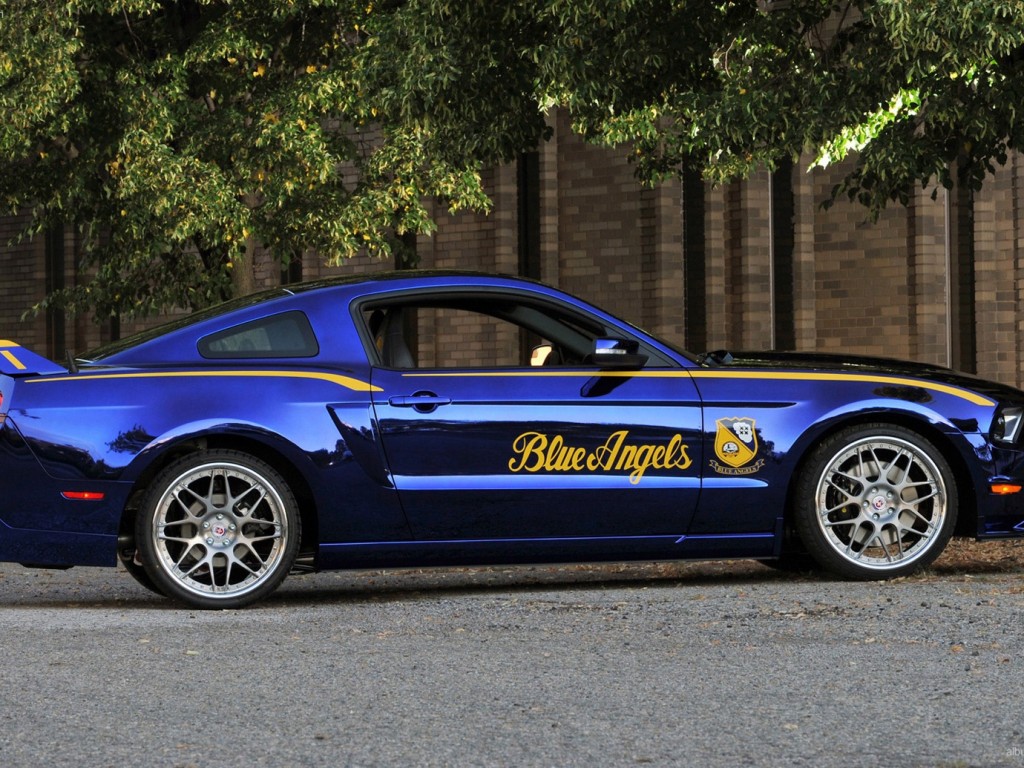
2012 Ford Blue Angels Mustang GT

The Ford Blue Angels Mustang GT pays tribute to 100 years of naval aviation, which will be celebrated all week at AirVenture 2011 as part of the show’s Tier 1 event status from the U.S. Navy tied to its yearlong Centennial of Naval Aviation festivities. The car will be on display inside the Ford Hangar throughout EAA AirVenture.
The exterior of Ford’s Blue Angels Mustang GT was inspired by the acclaimed naval aviation performance demonstration team and the F-18 Hornet aircraft it flies. The car’s custom rear spoiler’s vertical tailfins, the “screaming yellow” gloss accents, inclusion of the Blue Angels script and crest all are drawn from the Navy aircraft. The unique chrome blue paint, courtesy of Creations n’ Chrome, is unlike anything available on a production vehicle anywhere in the world.

With the Blue Angels crest stitched into its leather Recaro racing seats, the car’s interior also features offset stripes inspired by pilot flight suits.
Additional unique details of the Ford Blue Angels Mustang GT include cluster graphics, performance gauges, navigation screen images, safety belt fabric, instrument panel appliqués, rear seat-delete and cross-brace,


Blue Angels script in the illuminated sill plates and puddle lamps that project jet images when the doors open.
Under the hood, the Ford Blue Angels Mustang GT is all performance with a Ford Racing supercharged 5.0-liter V8 engine producing 624 horsepower. The Ford Racing components also include a handling pack, performance exhaust and racetrack brakes.

Sunday, July 31, 2011

BMW X3 M in works, powered by tri-turbo straight 6

BMW has an M treatment in the works for its mid-sized X3, according to a report by CAR Magazine. With the exception of the X1, all upcoming X models will have M division treatment available. This model is expected to hit the road as of early 2012.
Starting with the M3 motor, the BMW X3 M will be a modified version that could include some exciting new upgrades. BMW is working on taking forced induction where it has never been before with a tri-turbo in development. It is possible that the X3 M will debut with three turbochargers, including two exhaust-gas driven and one electric, paired with the straight six. To accommodate the changes displacement will increase from 3.0 to 3.2 liters. That should help it produce somewhere around  449-hp.
The X5 M and X6 M’s next generation will keep the twin-turbo 4.4 liter V8 engine, and gain 9-hp, bringing it up to 564-hp. Fuel efficiency will also be improved at up to a 15% increase.

2011 Ferrari 458 Challenge

Coming just a few months after the 2010 Frankfurt Motor Show unveiling of the Ferrari 458 Italia
The direct injection 4497 cc V8 remains strictly in production tune, with an output of 570 hp at 9,000 rpm. That said, modifications have been made to the gear ratios and calibration of its dual-clutch F1 gearbox to guarantee higher torque at lower revs. The Ferrari 458 Challenge is also equipped with the E-Diff electronic differential already employed on the road-going version, a first for Ferrari’s track-only cars.
The new Ferrari 458 Challenge also has a specific suspension set-up with solid aluminium bushings, stiffer springs, single-rate dampers, centre-nut 19″ racing rims, larger dimension Pirelli slicks and a ride height lowered by 30mm all round. It is also equipped with the new generation Brembo CCM2 brakes which debuted on the 599XX, Ferrari’s extreme experimental laboratory car, and which are integrated with an ABS system that features two configurations – low grip and high performance for dry surfaces.


on which it is based, the Ferrari 458 Challenge introduces a number of important modifications to adapt it for competition use.

Tuesday, July 19, 2011

Chevrolet Camaro ZL1

The 2012 Chevrolet Camaro ZL1 debuted at the 2011 Chicago Auto Show. It is the highest-performing Camaro and the most technically advanced car ever developed in its class. The new ZL1 continues the momentum of Camaro, propelling it into an entirely new realm of leading-edge performance technology. It is planned to launch at the beginning of 2012.
Motivated by a supercharged V-8 engine producing an estimated 550 horsepower (410 kW), the Camaro ZL1 will be the fastest Camaro ever offered by Chevrolet. And more than just power, the ZL1 features technologically advanced and highly developed chassis and suspension systems that help it deliver balanced, track-ready handling and braking power to complement its high engine output. Rigorous development of the ZL1 is ongoing, and official estimates of the car’s capabilities will be released later in 2011, as testing nears completion.
“Camaro ZL1 is about high-tech performance and design, and is a type of car no one has ever brought to this segment previously,” said Rick Scheidt, vice president of Chevrolet marketing. “It’s the most technically advanced Camaro ever, so we’ve chosen a name from the most elite and exclusive Camaro in history.”
The ZL1 name is derived from the all-aluminum racing engine of the same name, which was developed in the late 1960s and installed into a handful of regular-production 1969 Camaros. Only 69 were built with the engine, but they’ve achieved mythical status among enthusiasts, as they represented the pinnacle in Camaro performance – until now. The 2012 ZL1 model is designed to be a major leap forward for the Camaro, bringing a new level of performance capability to the segment.

The central goal of the car’s development was creating something new – a Camaro intended to reach optimal lap times on top road-racing circuits and excellent driving dynamics on the street. To achieve that goal, engineers evolved many of the existing Camaro’s systems, as well as incorporated new technologies such as electric power steering and Magnetic Ride Control, the world’s fastest-reacting suspension system.
Camaro ZL1’s design communicates and supports its performance mission. Rather than using decorative elements, ZL1 is visually differentiated from other current Camaro models with elements vital to the car’s elevated capabilities.
“Everything about the ZL1’s design is directly related to its technology and serious performance, especially aerodynamics,” said Ed Welburn, vice president, Global Design. “Our designers’ goal was to execute that function-oriented design with beautifully sculpted forms, creating an imposing, powerful persona. Function becomes the aesthetic. The intent is a car that delivers on the attitude it projects.”
Major elements of the ZL1’s design are a new front fascia and hood with air extractors, designed in tandem to create aerodynamic downforce to aid handling. The car’s hood includes a signature center section constructed of carbon fiber and rendered in satin black finish. New rocker panels, wide tires, 20-inch wheels and exhaust tips portray the car’s handling and power.
The ZL1 badge appears on the grille, hood and the brake calipers, all key areas portraying the technology within.
Tech overview.
Supporting the dynamic track and street performance of the ZL1 is the LSA 6.2L supercharged engine, which will produce an estimated 550 horsepower (410kW) and 550 lb.-ft. of torque (677 Nm), with specific features for the Camaro. Built on GM’s legendary all-aluminum, small-block V-8 architecture, the LSA features an intercooled supercharger system, premium heat-resistant aluminum-alloy cylinder heads and other details designed to ensure its exceptional performance is delivered with smoothness and refinement. Components and design elements that contribute to the LSA’s performance include:
• Balanced, lightweight reciprocating assembly
• High-strength hypereutectic pistons
• Sixth-generation Eaton supercharger with four-lobe rotors
• Piston oil squirters.
Because the Camaro ZL1 uses electric power steering, the engine does not incorporate a conventional hydraulic power steering pump on its accessory drive system. This enhances performance, because no engine power is used to turn a steering pump pulley.
Camaro ZL1 is a complete high-performance car, not just a Camaro with more power. Key technical highlights include:
Transmission – The high-performance Tremec TR-6060 six-speed manual is matched with the LSA engine. It is the “MG9” version of the transmission, with a higher torque capacity. It is used with a dual-mass flywheel and twin-disc clutch for easy operation and shift smoothness. A new, shorter-throw shifter actuates the gear changes.
Exhaust – ZL1 is equipped with a dual-mode exhaust system, which alters the sound level and character in response to engine rpm. First used on the legendary Corvette, and specifically tuned for Camaro ZL1, the dual-mode exhaust will give the car a signature sound.
Drivetrain – It is revised with a stronger driveshaft and rear axle system, featuring a larger and stronger cast iron differential housing, stronger axles and heavy-duty limited-slip differential. This patent-pending system is designed to ensure that ZL1’s tremendous power is delivered smoothly to the ground.
Suspension – The suspension features completely revised tuning and the inclusion of segment-exclusive Magnetic Ride Control. ZL1’s Magnetic Ride system will include driver selectable modes (Tour and Sport) tailored for the preferred style of driving. It uses advanced magneto-rheological science to produce shock damping with the highest level of precision, enabling body control optimized for excellent performance in everyday driving as well as track situations. This technology appears on only a small roster of some of the world’s finest performance cars. Other chassis elements are redesigned to support the car’s high-performance limits. Rear stabilizer bars have drop links repositioned outboard of the control arms. This makes the bars more effective in controlling body roll in turns, with crisp response to driver commands.
Brakes and Steering – Camaro ZL1 features an advanced track-capable braking system, developed in conjunction with experts from Brembo. The large 14.6-inch (370 mm) two-piece front rotors have six-piston calipers; the 14.4-inch (365 mm) rear rotors have four-piston calipers. ZL1 marks the entry of a new electric power steering system to Camaro. It is being developed to ensure precise control and feedback to the driver, with greater variability of effort for high-performance driving.
Exterior – ZL1’s signature from the front is the redesigned fascia and aluminum hood with a raised, carbon fiber insert. The fascia includes a front splitter and new vertical fog lamps. The fog lamp area includes air intakes designed for brake cooling. The hood features front-mounted air extractors that direct air precisely over the car. Visually, this center section, in satin black carbon fiber, communicates the car’s high-performance intent as a visual contrast to the car’s exterior color. Functionally, the air extractor is a key in connecting airflow closely to the bodywork, creating aerodynamic downforce. The carbon fiber center section reduces the mass of the hood. High-intensity discharge (HID) headlamps and fog lamps are standard. The rear of the car includes a diffuser and spoiler, also functional elements that enhance the car’s aerodynamics.
Wheels and Tires – New-design, 20-inch forged aluminum wheels, which are lighter than the 20-inch wheels used on the Camaro SS, are used with new Goodyear Supercar F2 ties developed specifically for the ZL1.
Interior – ZL1 is tailored for high-performance driving. The front seats feature microfiber suede inserts. Other enhancements include a redesigned steering wheel, alloy pedals, Head-Up Display with unique performance readouts and the “four-pack” auxiliary gauge system featuring a boost readout.
Production details.
All of the Camaro exterior colors will be offered with the ZL1, but black is the only interior color. The unique exterior features are complemented with a black center section on the hood. Inside, the Camaro ZL1 has heated leather seats with microfiber inserts and ZL1 logos embroidered on the front headrests. Microfiber suede is repeated as an accent on the instrument panel, adding a richer look to the interior. The ZL1 will include the same content as the current 2SS package and include the following new or unique features:
• Six-way power driver and passenger seats
• Unique instrument panel and door panel inserts; and ZL1-logo sill plates
• Steering wheel audio controls with Bluetooth capability
• Wireless PDIM and USB-port
• Boston Acoustics premium audio system
• Rear parking assist
• Rear camera system (displayed in the inside rearview mirror).
Engineers have already driven Camaro ZL1 prototypes extensively at demanding road courses in the U.S. and Germany, with final testing being completed through the balance of 2011.

Citroen C-Zero

Zero fuel consumption, zero CO2 emissions and zero noise: with the C-Zero, Citroën is broadening its compact vehicle range with a 100% electric solution. The new city car was designed to make urban mobility easier, with its compact dimensions, rapid charge, and sufficient range for day-to-day car journeys. And all this in a silence that makes occupants forget about the noise of the city. The Citroën C-Zero is a real concentrate of technology and creativity that meets tomorrow's challenges today!

Having already produced more than 5,500 electric vehicles, Citroën has the experience vital to being a frontrunner in a market segment that is set to grow significantly in the coming years.
Set for launch in last-quarter 2010, the Citroën C-Zero, developed in collaboration with Mitsubishi Motors Corporation, is the brand's second electric vehicle alongside Berlingo First Electric, developed with Venturi. In France, both these models qualify for the government bonus of 5,000 euros.
AN OFFERING CONSISTENT WITH CITROËN POLICY
Long committed to a policy of reducing fuel consumption and greenhouse gas emissions, Citroën, a leading environmental carmaker, is adding the Citroën C-Zero to a range that already features a wealth of environmentally-respectful products.
Current Citroën achievements:
  • C3 and DS3 models emitting 99 g/km of CO2 will be available from launch
  • More than 30% of Citroën vehicles sold emit less than 120 g/km of CO2
Upcoming technologies:
  • Widespread application of second-generation Stop & Start system in 2010
  • Launch of a full-hybrid vehicle, the DS5, in 2011
  • 100% ELECTRIC VEHICLE
The Citroën C-Zero is a full-electric vehicle powered by a permanent magnet synchronous motor delivering 47 kW or 64 bhp EEC from 3,000 to 6,000 rpm. Maximum torque of 180 Nm is available from 2,000 rpm. Power is transmitted to the rear axle via a single-speed reduction gear.
The motor is powered by a latest-generation 330-volt lithium-ion battery system comprising 88 50-Ah cells (for onboard energy of 16 kWh) mounted in the centre of the vehicle.
Lithium-ion technology keeps battery weight down compared with conventional technology while offering equivalent performance. It is also resistant to partial charges, which have no incidence on battery longevity.
EASY TO CHARGE, EASY TO USE
Recharging the Citroën C-Zero's batteries is child's play. Owners simply plug the supply cord into a 220-volt socket. A complete charge lasts six hours, while an 80% charge is possible in just 30 minutes using an external station with a single-phase current of 125 A at 400 V, for power of up to 50 kWh.
Using the car is equally simple. When the driver turns the ignition key a beep confirms that the car is running. Citroën C-Zero drives like a regular car with an automatic gearbox.
The traditional fuel gauge is replaced by a battery charge indicator.
PERFORMANCE AND FEATURES FOR PRESENT-DAY NEEDS
Driving today is characterised, in the week, by short journeys of less than 40 km on average, with a full 70% of trips under 30 km.
The Citroën C-Zero is perfectly adapted to the needs of all kinds of companies - including government, local authorities and company fleets - and also to those of private customers looking for a vehicle with exceptionally low running costs. With four real seats (thanks to a 2.55-m wheelbase) and a 166-litre boot, the Citroën C-Zero is impressively quiet to drive and boasts a plethora of comfort and safety equipment. Original-fit features include power steering, ABS, TCS, ESP, power windows, six airbags, air conditioning and an autonomous telematics box for the emergency call system.
A CITY CAR AT EASE ON THE OPEN ROAD
The Citroën C-Zero's compact exterior dimensions, at 3.48 m long, and 9-m turning circle make it a cinch to nip in and out of city traffic. And with a top speed of 130 kph and acceleration from 0-100 km/h in 15 seconds and 60-90 km/h in six seconds, along with a range of around 130 km over a standard combined cycle, it is also fully at ease out on the open road. In France, 70% of daily car trips made in the week are under 30 km, for an overall average of 40 km.

Friday, April 15, 2011

Subaru Legacy Gliding in England Latest


But, of course, the reality is that most people don’t end up in the sedan segment out of any particular burning desire. The cars are practical three-box designs with enough room to carry four or five passengers and enough trunk space to accommodate the baggage for said people. It’s the classic silhouette of the suburbs, as normal and accepted as a pair of pleated pants or a divorce.
That baked-in sense of normalcy presents some interesting opportunities for manufacturers who tread slightly out of the usual focal length. For years, Volkswagen successfully offered its Jetta as a robust driver’s car at a reasonable price, leaving the juggernauts like Toyota Camry and Honda Accord to their own recipe (a successful one, by the way). But ever since VW changed the Jetta’s raison d’etre to include something other than driving excitement, it’s left a gaping hole in the market.

Sunday, October 24, 2010

Bugatti Veyron


One quickly runs out of superlatives when trying to describe the Bugatti Veyron. I'm not even sure if one should use the word "car" to refer to such a monster. Endowed with absolute power and a daunting maximum speed, the Veyron looks and sounds like it just came out of some impossible future inhabited by gigantic gas pumps.

50 years after Ettore Bugatti's death, Volkswagen used its magic wand to resurrect the legendary firm, and to say the least, the German carmaker did a mindblowing job.

Motorsports enthusiasts will instantly refer you to the mythical Bugatti Royale from the 1930s, a colossal and majestic masterpiece, sold at such a prohibitive price that only three people were able to afford to buy it at the time. The Royale turned out to be one of the most rare and prestigious automobiles of all times, but despite record-breaking performances, its endless and fairytale-like silhouette became above all a symbol of unequivocable luxury able to make any Rolls Royce look like your everyday sedan. Instead of trying to match the Royale's incredible legacy, re-Volkswagen decided to look for inspiration in Bugatti's racing history to design the Veyron, rightfully using the name of the famous driver who won at Le Mans in 1939 behind the wheel of a Bugatti Type 57.

We got to drive this exceptional vehicle for a few miles in the parking lot of a San Diego country club. It's easy to feel intimidated by this incredible machine, so we carefully and promptly handed it back to its official tutor, French race car driver PierHenri Raphanel.

The Veyron is unbeatable. Its wide and massive shape sets it aside from other supercars such as the sleek Mercedes McLaren SLR or the angular Ferrari Enzo. But the real thrill comes from the Veyron's unrivaled performances: with an engine delivering 1001 hp and a top speed neighboring 250 mph, the new Bugatti flies over the road like a rocket in the morning sky. The Veyron goes from 0 to 62 mph in 2.5 seconds, which is no less than a second faster than a Ferrari Enzo. Pedal to the metal, you can reach 200 mph in little more than 15 seconds. This is a first in the field of street-legal vehicles, and you would have to steal a Champ Car to have a chance to catch up with the Veyron. To be frank, at the end of the day, I still wouldn't put a dollar on you.

Revolutionary techniques were involved in the making of this 21st Bugatti. In order to gather the 1001 horsepower needed to establish a new automotive legend, Volkswagen has designed an 8 liter W16 engine by mating two narrow-angle V8s. Peak torque is 922 lb/ft at 2200 rpm No less than four turbochargers garnish this frenzied powerhouse and engineers had to come up with a special seven-speed dual-clutch transmission to allow for all this wild energy to be transferred to the road. Needless to say, fuel efficiency was never an issue in the process, and you'll be delighted to learn that the Bugatti Veyron has given a new meaning to the term gas-guzzler by settling for a little more than 2 miles per gallon at top speed. In this configuration, the tank would go from full to empty in less than 12 minutes. All kinds of rumors are surrounding this unbelievable ride: pushing hard on this monster will make a set of tires last about 125 miles.

It took several years of trial and error to achieve the Bugatti Veyron's final version. Launched by flamboyant CEO Ferdinand Piëch in 1999, the project started with a prototype equipped with a W18 engine (three flatV6's side by side).

Soon, engineers realized they needed a more compact structure, and the W16 was adopted and installed in a mid-rear position. Fine tuning the beast was a long and difficult task, and many incidents occurred during the testing. A lack of stability at high speed even provoked an accident and the destruction of a prototype. In 2003, Piëch was replaced by Bernd Pischetsrieder at the helm of Volkswagen, and the new leadership took the project back to the drawing board. Under the supervision of engineer Wolfgang Shreiber, the Veyron became more stable and drivable. Gordon Murray, the famous and brilliant father of the astounding McLaren F1 of the early 90s who had in the past harshly criticized the Veyron initial concept and prototypes, was recently revealing his thoughts on the Bugatti's final version: "One really good thing, and I simply never expected this, is that it does change direction. It hardly feels its weight. Driving it on a circuit I expected a sack of cement, but you can really throw it at tight chicanes."

Only 300 Bugatti Veyrons will be made over the next five years. It will cost you no less than $1.5 million to get your hands on one of them, but apparently, Bugatti has already received 70 firm orders. In a classy move, Volkswagen moved Bugatti back to Ettore's original headquarters at Saint Jean Castle in Molsheim, Alsace, and the resurrected firm should even increase its production in 2006 to meet the demand. Believe it or not, all in all, the Veyron is a good bargain: its manufacturing costs far exceed its selling price. Following the steps of its respectable ancestors, this unique automobile is first and foremost a magnificent and decadent study announcing the end of an era. Stepping away from the cockpit of this unforgettable machine, lost in a state of denial, it was almost hard to keep in mind that the days of gasoline engines are numbered.